

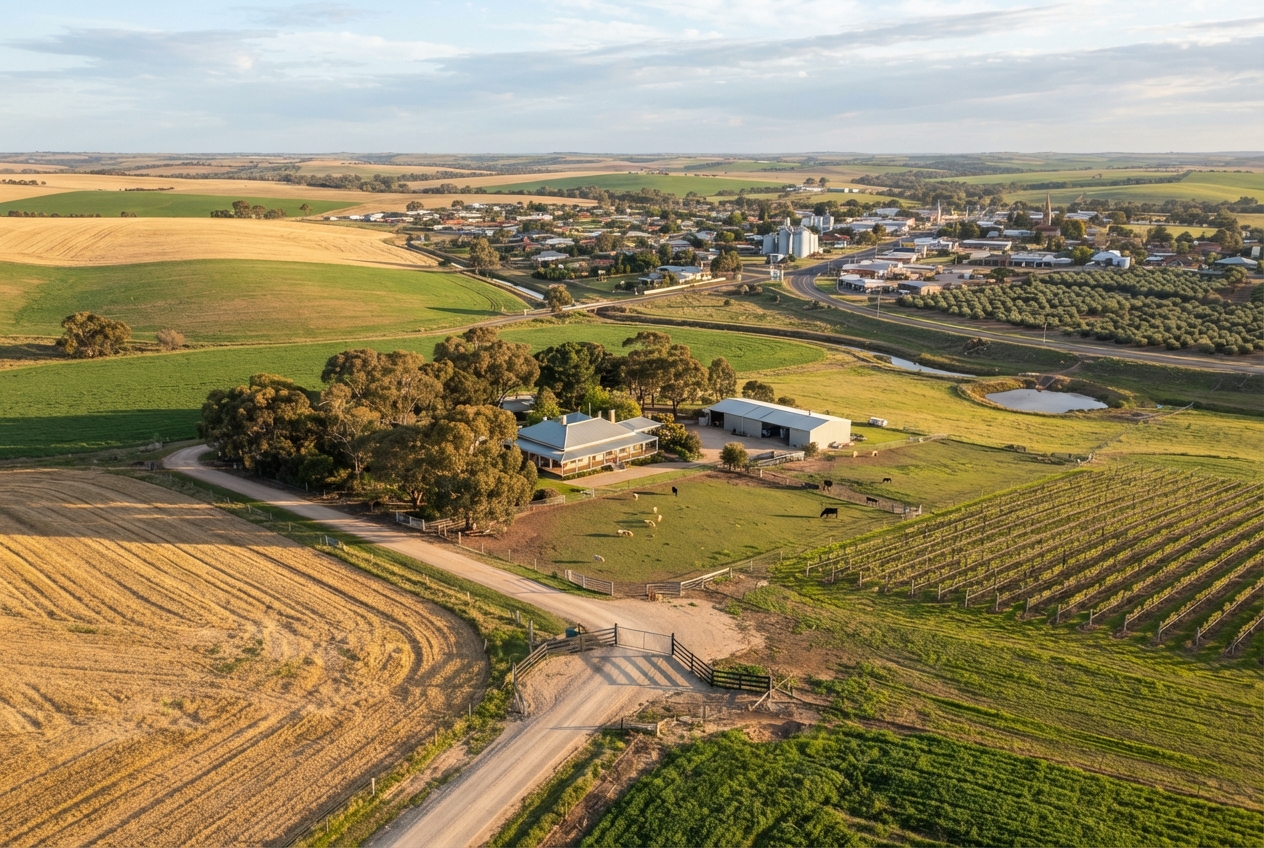
The regional and rural property landscape across South Australia has undergone a profound structural shift over the past several years. Moving through 2026, the market continues to reflect a complex interplay of agricultural commodity prices, changing seasonal weather patterns, shifting buyer demographics, and a sustained appetite for lifestyle modifications. As real estate professionals operating across these vast regional communities, we observe first-hand how these diverse elements directly influence land values, transaction volumes, and local market sentiment from the Mid North down to the South East.
Understanding the rural market requires looking far beyond the macroeconomic metrics that typically define metropolitan capital cities. While city buyers focus heavily on residential interest rates and urban zoning laws, rural property participants are intensely focused on localized factors such as multi-generational land accumulation, infrastructure access, water security, and primary production output. This comprehensive market update evaluates the current state of South Australian regional real estate, outlining the distinct trends governing agricultural acreage, regional township homes, and lifestyle properties.
Agricultural Land Values and Primary Production Drivers
Broadacre farming land across South Australia remains highly valued, though the market has entered a period of consolidation compared to the rapid escalation seen earlier in the decade. The premier cropping and grazing districts—including the Yorke Peninsula, Eyre Peninsula, the Mid North, and parts of the South East—continue to see strong underlying demand for high-quality, productive acreage. Local farming operations seeking to expand their existing footprints remain the primary drivers of these transactions, as families look to build scale, achieve greater operational efficiencies, and secure land for subsequent generations.
This sustained interest in broadacre land is underpinned by the long-term profitability of South Australian agriculture, despite fluctuating seasonal conditions and shifting international commodity markets. Grain growers and livestock producers recognize that prime land with reliable rainfall or established water allocations represents a finite asset. Consequently, when tightly held multi-generational parcels are offered to the market, they frequently command premium prices through highly competitive expressions of interest or public auction campaigns. Buyers in 2026 are executing careful due diligence, prioritizing soil health, historical yield documentation, layout efficiencies, and functional infrastructure such as modern grain storage, shearing sheds, and secure boundary fencing.
The Evolution of the Regional Lifestyle Market
The demand for lifestyle properties and hobby farms within a commutable distance of major regional hubs or the outer metropolitan boundary remains a vibrant segment of the South Australian market. Areas such as the Fleurieu Peninsula, the Adelaide Hills, and the Barossa Valley continue to attract a steady influx of purchasers seeking a change of pace without entirely disconnecting from essential services and urban conveniences. This trend, which accelerated significantly during the early 2020s, has matured into a permanent market sector supported by flexible working arrangements and improved regional connectivity.
Lifestyle buyers are typically looking for properties ranging from two to twenty hectares that offer a mixture of comfortable residential living and manageable land use, such as boutique viticulture, small-scale horse management, or simple hobby farming. The challenge within this sector remains the limited availability of well-located properties that feature high-quality housing alongside functional country infrastructure. As a result, properties that present a move-in-ready home coupled with reliable water supply, modern power connections, and clear access roads generate significant enquiry and often achieve prompt sales outcomes.
Housing Trends and Dynamics within Regional Townships
Away from the expansive agricultural holdings, the residential markets within major South Australian regional centers—such as Port Lincoln, Mount Gambier, Port Pirie, and the key Riverland townships of Berri, Renmark, and Waikerie—are experiencing their own unique real estate cycles. These regional hubs serve as vital economic anchors for their surrounding districts, offering employment, education, healthcare, and retail infrastructure, which in turn drives consistent local housing demand.
A major defining characteristic of regional township markets in 2026 is the persistent tightness of available housing stock. Similar to metropolitan areas, regional construction sectors have faced elevated material costs and labor constraints, slowing the delivery of new residential subdivisions and housing turnkeys. For prospective buyers, this means established houses within regional towns are highly sought after, with well-presented family homes attracting active competition from local owner-occupiers, downsizers from larger rural holdings, and metropolitan investors drawn to the relatively affordable entry points and attractive rental yields.
Water Security and Environmental Management
In any analysis of rural and regional real estate within South Australia, water availability and environmental security emerge as critical factors dictating property values. Across the Murray-Darling Basin, including the productive Riverland and Lower Lakes regions, water allocations, delivery rights, and irrigation infrastructure are intrinsically linked to the underlying value of the land itself. Properties featuring secure, long-term water licenses or state-of-the-art, water-efficient irrigation networks naturally command a significant premium over less-equipped counterparts.
Furthermore, buyers are placing an increased emphasis on environmental resilience and sustainable land management practices. Prospective purchasers of both commercial farming enterprises and lifestyle parcels routinely scrutinize water catchment capacity, natural spring reliability, groundwater salinity levels, and historical flood boundaries. Properties that demonstrate proactive land management—such as established windbreaks, secure livestock shelter belts, weed control programs, and well-maintained erosion management infrastructure—are highly favored in the marketplace, as they mitigate operational risks and protect the long-term capital value of the real estate investment.
Strategic Guidance for Rural Market Participants
Navigating the contemporary South Australian rural property market successfully requires patience, deep local insight, and thorough financial preparation. For vendors, presenting a rural asset effectively involves compiling transparent documentation, including verified production histories, soil test results, water infrastructure maps, and clear property boundary definitions. Highlighting these practical elements through targeted regional marketing campaigns ensures that the asset appeals directly to serious, motivated operators and astute investors who recognize long-term value.
For buyers, establishing open lines of communication with local regional real estate agents is paramount. Many significant rural transactions, particularly large-scale agricultural expansions or premium off-grid lifestyle properties, occur quietly through private networks or off-market negotiations before reaching mainstream digital platforms. By clearly defining your specific operational requirements, geographic preferences, and financial capability to local specialists, you position yourself to capitalize on unique regional opportunities as they arise, securing a lasting piece of South Australia’s prosperous rural landscape.